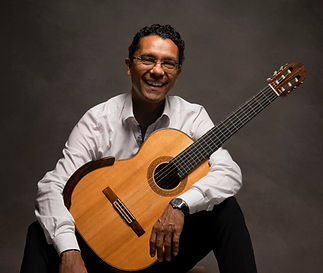
Hello...
Welcome to my page.
Music, and especially the guitar, has been my passion since I was 12 years old. Studying closely with great maestros such as Celin Romero, Pepe Romero, Petar Janković, and Brett Terrell gave me the opportunity to turn my dream into reality.
Following your dreams, working hard, and staying focused on what inspires and fulfills you is what truly matters.
I hope my story can offer support and encouragement on your own journey.


My Story
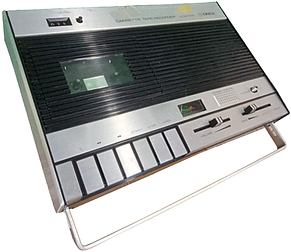
The beginning, learning the guitar just by ear from an old cassette tape by Narciso Yepes
Never let anyone convince you to turn away from what you feel you were born to do. Your passion and your dreams are the driving force that fuels your life and keeps you moving forward every single day.
I was 12 years old when my mother enrolled me in guitar lessons at the local community school in Germany, without asking me first. Somehow, she already sensed where my passion lay. At that time, I wasn’t yet aware of my love for music, but my grandfather had introduced me to classical music and opera when I was just 9. Looking back, I think that was the spark that stayed with me forever.
After learning only a few basic chords at the local community school, I naturally gravitated toward classical music, the music I had heard on an old cassette tape that I had found in a box in the basement, and began exploring it entirely on my own.
That was the beginning of my self-taught journey on the guitar. I didn’t learn to read music until I was 25, when I was finally accepted into a music university in the United States. I began playing the guitar entirely by ear. I was fortunate that my grandfather had given me an excellent tape player, one that allowed me to rewind just a few seconds with great precision. By repeatedly listening to short passages and trying them out on my guitar, I learned my first pieces of music. What’s funny, looking back, is that I didn’t realize at the beginning that I needed to tune my guitar to the same pitch as the recording. As a result, the first piece I ever learned was a Baroque work by Christian Andersen originally in D major, but I unintentionally shifted it to B major on the guitar, a rather challenging key to perform! Very soon I found myself completely immersed in the world of the classical guitar, so much so that I stopped studying for school. I almost ended up repeating a year, because the moment I came home, I would sit down with my guitar and play for hours. By the way, the guitar I was using was an instrument my father had bought many years earlier in Brazil. He never learned to play, so the guitar ended up stored away in the basement. I had no idea at the time that it was actually a brilliant master instrument made by the Brazilian company Giannini. In the 1970s, they built a small number of high-quality guitars using German spruce and Brazilian rosewood. Without knowing it, I started my musical journey on a truly exceptional instrument, and I was incredibly lucky for that. Soon after I graduated from high school, my family moved back to Bolivia, to the city Santa Cruz, where I was born. My mother wanted me to reconnect with my Latin roots and, of course, to learn Spanish properly. Since I had moved to Germany at the age of eight, I had more or less forgotten the language. Fortunately, our heritage stays within us, and the language returned fairly quickly. Still, I needed some support, because the Spanish I remembered was more of a street-Spanish, not nearly enough to handle academic demands. I enrolled in school for two years and experienced Bolivian youth culture at age 18, lots of parties and fun. Sadly, this period was not beneficial for my guitar development, mainly because the city of Santa Cruz and its youth showed little interest in cultural or artistic activities. But when I moved back to Germany, everything returned with full force. I enrolled in Business Administration at the University of Munich, and this is where destiny revealed the path I was meant to follow. Shortly after arriving in Munich, I met a girl. We were together for a few months, and she happened to be a pianist already teaching at a local music school near Munich. One day, she asked if I could substitute for the guitar teacher, who had suddenly fallen ill. The school needed someone urgently. That moment marked the beginning of my serious musical studies. I said yes, and practiced two weeks intensely to rebuild my technique and repertoire. Fortunately, the students were all very young, and my limited teaching experience was more than enough. That’s how I began teaching guitar at the "Musikschule Aschheim". And once again, the guitar took hold of me and never let go. I practiced obsessively every day, and nearly failed my university classes all over again.
Stepping out of the practice room and into the Real World – The big Turning Point
The defining moment came when I decided to participate in the very first Nürtingen Guitar Festival. I was incredibly nervous to call them, after all, I had no teacher’s recommendation, no formal training, and I couldn’t read music at all. The man who answered the phone was the festival director himself, and he spoke to me with great kindness. I explained my situation, and he replied: “We are very happy that our festival is completely sold out, but I can offer you the last spot in a masterclass with Costas Cotsiolis.”
I was terrified, but I said yes. Weeks later, I drove to Nürtingen. After checking in at the festival office I found the hall where the masterclass was being held. I had practiced like crazy: Gran Jota Aragonesa and Recuerdos de la Alhambra, all learned entirely by ear, with no sheet music. The hall was full, packed with guitarists who were watching, taking notes, and performing on a level I had never seen before. I suddenly realized: I’m not the only crazy one! And everyone could read music, except me. Then it was my turn. Costas greeted me warmly, and to my surprise, he spoke excellent Spanish. I was relieved, I could communicate with him without barriers. Naturally, he asked what I planned to play and where my sheet music was. I told him honestly that I couldn’t read music yet, but I would like to start with "Recuerdos de la Alhambra". He smiled and said, “Let’s hear it.” After I finished, he asked what else I wanted to play. I said, "Gran Jota". Again he said, “Let’s hear it.” Halfway through the piece, he stopped me. He looked at me and asked what I did for a living. I explained I was studying Business Administration at the university. His response changed the path of my life. In a serious, almost solemn tone, he said: “Quit Business. A genius is being lost if you don’t, study guitar seriously.”
Mr. Siegel and the Munich Concert Series
My life was about to change dramatically, and a key part of that transformation was the Guitar Concert Series in Munich. The manager of the series was a true gentleman, Mr. Wolfgang Siegel. I owe him so much, more than he could ever realized.
Once again, it was my former girlfriend Andrea, the pianist, who unknowingly opened an important door for me. Early in our relationship, she invited me to a guitar concert but refused to tell me who would be performing. We arrived at the "Musikhochschule of Munich", and as soon as I saw the large poster outside, my heart stopped. My very first live guitar concert in Munich was great Pepe Romero himself, a living legend.

From that day on, I didn’t miss a single concert organized by Mr. Siegel. After attending several concerts, Mr. Siegel began to recognize me. One evening, after a performance by the great Manuel Barrueco, he approached me and invited me to join him and a group of friends for dinner with Manuel. I couldn’t believe it. Mr. Siegel insisted I sit next to Manuel so I could speak Spanish with him and help him feel at ease. Eventually, Manuel turned to me and asked, “So, what’s your story with the guitar?” I was surprised by the question, but I shared everything, my background, my self-taught beginnings, and the unforgettable masterclass with Costas Cotsiolis. What Manuel said next led me to make one of the most important decisions of my life. He told me: “If Costas said that to you, then he’s absolutely right, trust him. But you won’t be able to study in Europe. The entrance exams require extremely advanced music theory. Go to the United States. In the US, they look for talent first, everything else you can learn later.”
David Russell – A kind Man, the King of the Guitar
Everything suddenly felt possible now, after the incredible outcome of the events. Driven by that momentum, I began searching for universities in the United States. As a true guitar fanatic, I always kept copies of the magazin "Gitarre & Laute" at home, and while flipping through one issue, I came across an advertisement for the University of Southern California in Los Angeles, where Scott Tennant and Bill Kanengiser were teaching.
I felt a spark, a sense of direction. I would apply at USC! But on that very same page, something else caught my eye: an announcement for a masterclass with David Russell. The King. A legend I had admired for years. Back in the 90s, David taught a small annual masterclass in Aschaffenburg/Germany, and without hesitation, carried purely by hope, I called to sign up. To my astonishment, I was accepted. No questions, no explanations. I was in. A few weeks later, I traveled to Aschaffenburg with trembling excitement. This time, I brought the sheet music for Barrios’ "La Catedral", which I had bought at "Knobloch Musikladen" in Munich, but even then, I couldn’t read a single note. Still, I wanted something to hold onto, something that made me feel a bit more “legitimate.” In truth, everything I prepared was by memory, by ear. When I arrived, I listened to the other students play, most of them younger than me, some almost kids, and they performed at an astonishing level. Part of me felt intimidated, but a bigger part felt inspired. This was where I belonged. Then my moment came. I walked to the front, placed the music on the stand for appearance’s sake, and began to play from memory. And there he was, David Russell, watching with the kindness of a man who radiates calm and encouragement. His presence alone made me feel safe. When I finished, he offered generous, warm words. He did point out some unusual fingerings and wrong notes, gently asking about them. That’s when I confessed that I had learned the piece entirely by ear, and that I couldn't read music. David smiled, the kind of smile that makes the world stop. Then he shared something that lifted my soul: when he first started guitar, he too learned everything by ear, sitting with his father, listening to Segovia recordings. He, too, had begun exactly the same way. Hearing that felt like a blessing. It was as if he spoke directly to the insecure boy inside me, saying, “You belong here.” After the class, we all went for coffee, and I found myself sitting with David, heart full, questions burning. I needed another voice, another perspective, because I was standing on the edge of the biggest decision of my life. I told him everything about Costas and Manuel. And David, with his gentle wisdom, simply said: “Follow your dreams. Not because Costas or Manuel said so, follow them because you feel it. It’s your dream.” Those words didn’t just guide me, they lit the way forward.
Pepe Romero and Wolfgang Siegel
Once again, Mr. Siegel in Munich shaped my path without ever realizing it. One afternoon, while browsing the local arts newspaper, I saw an announcement that made my heart jump: the American Sinfonietta with Pepe Romero performing Rodrigo’s Concierto de Aranjuez.
Once again, Mr. Siegel in Munich shaped my path without ever realizing it. One afternoon, while browsing the local arts newspaper, I saw an announcement that made my heart jump: the American Sinfonietta with Pepe Romero performing Rodrigo’s "Concierto de Aranjuez". The concert was being held in a small town outside Munich, far, inconvenient, and completely worth the journey. I didn’t hesitate for a second. That very same evening I took the metro and the bus to the concert hall. When I arrived, the woman at the ticket office told me the concert was almost sold out. The only ticket available was a returned seat, first row, center, right in front of the conductor and Pepe Romero. I didn’t think twice. I bought it instantly. The performance was breathtaking. Pepe Romero played with a depth and fire that felt almost unreal, like watching the music come alive right in front of me. The second movement was simply unreal. After the concert, I went straight to the bus stop. I was still floating somewhere between earth and heaven, replaying every moment of the performance in my mind. Suddenly, a red BMW pulled up beside me and the window rolled down. It was Mr. Siegel again. “Do you need a ride back to Munich?” he asked. Of course I accepted. I got into the car, grateful and surprised. But almost immediately he apologized and said he needed to make a quick stop to visit a friend, if I didn’t mind coming along. I had no idea what he meant, but I trusted him completely. A few minutes later, we pulled up to the "Bahnhof Gaststätte". We walked inside. Mr. Siegel led me through the restaurant, and then I had to literally catch my breath. Pepe Romero was sitting at a table, smiling at us. I stood frozen, unable to believe what I was seeing. Pepe greeted us warmly and invited me to sit with them. Suddenly there I was: just the three of us at a small table, Pepe Romero, Wolfgang Siegel, and a completely speechless me. Mr. Siegel and Pepe spoke about some upcoming concerts and possible contracts, while I tried my best to act normal, though my heart was racing. We ordered beer, good Bavarian beer, and slowly I began to relax. Pepe turned to me and asked, “How do you speak Spanish so well?” That was my chance. I told him about my Bolivian roots, my unusual journey with the classical guitar, and how his performances had always inspired me deeply that every time I heard him play, I returned home and practiced with renewed intensity. I shared my experiences with Costas and David Russell, and told him that I had finally made my decision: I would study guitar in the United States, just as Manuel Barrueco had recommended. Pepe listened with genuine interest. He asked about my repertoire, how I managed to learn pieces entirely by ear, and how I was able to catch every note. I told him about the old tape player from my grandfather, how I would rewind just a few seconds over and over again, searching for every tiny detail. And how patience, stubbornness, and passion carried me through. Pepe looked at me, clearly intrigued. And then, in a moment I will never forget for the rest of my life, he reached into his jacket pocket, took out a pen, grabbed a napkin, and began writing something. I watched, unsure of what was happening. He slid the napkin toward me. On it were his home address and his home telephone number. “When you’re ready,” he said, “let me know.” I still keep that napkin in a safe place to this very day. It remains one of the greatest surprises, and greatest honors, of my life. I had no idea then, but this simple napkin would later become another turning point on my musical journey.
University of Southern California – Los Angeles
Understanding how the application process worked in the United States took me months, and the amount of paperwork felt endless. Still, with all documents finally submitted, I boarded a plane to Los Angeles, ready, or so I believed, to play my audition at USC-Los Angeles. Looking back, I still cannot understand how naïve I truly was. I had absolutely no idea what an audition really required.

I didn’t worry about it either. I simply prepared the one piece I loved most at that time: Barrios’ "Un sueño en la Floresta". That was it. After checking into a hotel directly across from campus, I wandered through USC on my own, overwhelmed by its atmosphere. The Thornton School of Music felt almost legendary to me, a place where Pepe Romero had taught, and where Scott Tennant and Bill Kanengiser, both Romero students and members of the Los Angeles Guitar Quartet, were still teaching. In one hallway I passed a few students signing in for their auditions. A joyful voice greeted me; it was Jim Smith, the director of the guitar program. He welcomed me with genuine kindness and reminded me that I still needed to finish some paperwork. That afternoon he invited me to a small student concert. The level was astonishing, and everyone was friendly. For the first time I pictured myself studying there. I wanted that dream, and I promised myself to give everything in the audition. The next morning, I walked nervously through the building. Young guitarists were warming up everywhere, each of them looking focused and prepared. I found the audition room. When the door opened, Jim Smith smiled and invited me in. Inside sat Bill Kanengiser, calm, gentle, smiling, next to another professor whose name I no longer remember. They welcomed me warmly and asked me to play what I had prepared. I performed Barrios’ "Un sueño en la Floresta". As far as I recall, I played extremely well, maybe one of my best performances. When I finished, I felt relieved and proud, unaware of what was coming next. Bill turned around and reached for something from a bookshelf. Suddenly, he placed a sheet music stand in front of me and set down a score. I froze. The only thing I recognized on the page was the name J. S. Bach. My heart stopped. The room seemed to close in on me. All I managed to say was: “I cannot play this… I can’t read music.” Bill looked at me, kind, but also stunned. He asked how I had learned the Barrios. I explained that I learned everything by ear, second by second, repeating tiny fragments until they made sense on the guitar. He nodded slowly. “I can imagine you did that with the tremolo section,” he said. “But the rest must have been an enormous amount of work.” He had probably heard the unconventional fingerings, maybe even a few wrong notes. Then, very politely, he asked me to leave the room. My English was not good enough to understand him perfectly, and I hesitated for a second, unable to move, until he repeated, more firmly: “Please go!” And so I walked out of that room, shaken, confused, and heartbroken, never imagining that what felt like complete failure would become one of the most defining turning points of my life. That evening, I had no strength left for anything. The realization hit me hard: my level simply wasn’t enough. Talent alone would not open the doors I dreamed of, classical guitar demanded deep academic preparation, discipline, and knowledge I didn’t yet have. I wandered to a large shopping mall nearby, still numb, and bought a few things just to pass the time. Eventually I went to get dinner. American fast food had always sounded almost mythical to me, so I decided to try it. I walked into Wendy’s and ordered a Smoky Bacon Cheeseburger, something that felt so distinctly “American,” far from anything we had back in Germany. Later, back at the hotel, I watched a movie, exhausted, and finally drifted into sleep. The next morning, I returned to the music school to hand in a final piece of paperwork, more out of obligation than hope. In my mind, the audition was over, and I had failed. There was no reason to expect anything else. As I walked through the hallway, I saw Jim Smith again. He smiled at me warmly. I couldn’t understand why, after all, I felt humiliated after the audition. He approached me and said: “Congratulations, Roland. You’ve been admitted, and with a scholarship offer.” For a moment, I couldn’t speak. It took time for his words to sink in, to truly register. But when they finally did, I felt something inside me open, like a door I had believed was forever locked. I was in. I was accepted to study guitar at USC. And I had earned a scholarship. My dream, against all odds, had come true.
Roland we have a problem (Jim Smith on the phone)
After I returned to Munich, my decision was set in stone: I would study classical guitar. There was no turning back. But that meant I had to call my parents and tell them, and that phone call became the most painful conversation I ever had with my father.
He was firmly against it. He insisted that I should continue studying business, that I focus on getting a “real job.” Hearing this broke something inside me. All those years they had encouraged me to play, but only as a harmless pastime, something to keep me occupied. The moment I chose to pursue music seriously, the support vanished. I felt suddenly, deeply alone. Still, my resolve did not waver. I hung up the phone, walked to the university, and officially withdrew. The acceptance letter from USC was already in my hands, and for the first time in a long while, I felt proud of myself, proud of my courage, proud of my choice. With that letter as my proof and my hope, I decided to travel to Bolivia, where my family moved. It would be my last attempt to earn their support. The respond of my father was the same even more sever. Her promised not to finance any of my studies and I had to look for myself. My mother, however, was the brave one. Quietly, without my father knowing, she chose to support me. At first her help was simple but essential: if I wanted to study in the United States, I needed to pass the TOEFL and SAT exams. We found a small English institute in Santa Cruz, humble, nothing fancy, but it offered exactly what I needed. So I began studying English every day, determined to meet every requirement standing between me and my dream. Then, one morning, the phone rang. Because I had listed all my contact information in my application, Jim Smith was able to reach me in Bolivia. The moment I picked up, he spoke with a seriousness that froze me in place: “Roland, we have a problem,” he said. “But we’re already working on it. I just wanted you to hear it from me.” The problem was this: USC required every applicant to submit transcripts from high school all the way through university. A friend in Munich, who worked as a certified English translator, had translated the mountain of documents for me, even the exams from my mechanical-engineering training before business school. What no one had explained, though, was the importance of GPA. I had no idea what that “damn GPA” even meant. USC expected a 4.0 from applicants. And naturally, after years of living and breathing the guitar, my grades in Business Administration were far from perfect. The admissions office evaluated them and came up with something like a 2.9. Far below the requirement. Under normal circumstances, that would have been the end of the story. But Jim told me that everyone in the music department agreed those business grades had nothing to do with my ability to study classical guitar. My future at the Thornton School of Music wasn’t about economics or mechanical training, it was about music. Pure and simple. He was going to meet with the Dean of Admissions and try to convince him to allow my admission despite the numbers. For the first time in days, I exhaled. It wasn’t a guarantee, but it was hope, real, tangible hope. And I held onto that hope with everything I had, imagining the day I would see Jim again in Los Angeles, ready to begin the life I had chosen. But to cut the long story short: In the end, the Dean of Admission at USC did not change his mind. When Jim called again to tell me the final decision, the disappointment hit me like a brick. He sounded genuinely regretful, his voice warm, apologetic, almost embarrassed on my behalf. I could tell he had truly tried everything. But the answer was still no. And so the door I had dreamed of walking through closed right in front of me. For a moment, it felt like everything I had fought for, every hour of practice, every decision I had made, had collapsed. But even in that moment of heartbreak, something inside me refused to give up. If USC wouldn’t open its doors, then I would find another way in. One way or another, I would make my dream come true. And on top of everything, my father and I broke completely. From that moment on, I felt an almost fierce need to prove that I could reach my dream without him. If the path I’d chosen was blocked, then I would carve out another one myself.
In memory of a great human being.
Indianapolis—Here I Come
My disappointment was immense, but I refused to let it swallow me. I kept myself busy, practicing guitar endlessly and studying English with the same determination. The owner of the language academy where I was preparing for the TOEFL and SAT was an American gentleman named Max Freedman.
He was building up his school in partnership with the ALA (American Language Academy). One afternoon I told him everything about USC: the hope, the setback, and my plan to try again somewhere else. But there was one crucial lesson USC had taught me, I had talent, and I could study guitar at a university level. If Jim Smith, Bill Kanengiser, and other faculty members believed in me enough to offer a scholarship, then surely I could find another place willing to give me a chance… maybe an even better one. Max didn’t hesitate. He told me about Butler University in Indianapolis, USA. He explained that I could enroll directly in ALA on Butler’s campus, prepare for the English exams, and at the same time explore the music school and see what possibilities might open up for me. I didn’t think twice. One week later, I was already on a plane to Indianapolis. Florian, a German student picked me up at the airport and showed me to my room in the international dorm. I was impressed, the campus felt welcoming, alive, and for the first time in a long while, I felt like I belonged somewhere. Like I was already part of the university community. The next day I checked in at ALA. Only a few hours later, after asking my way through various offices, I found myself sitting in front of the director of Butler’s International Office. He was kind and genuinely curious about my story. I told him everything, USC, my dreams, and my determination to study classical guitar. He explained that the audition period for the music department had ended more than two months ago. Scholarships were already distributed; chances were slim. But he would speak with the Dean of International Admissions to see what might be possible. I left his office with a strange but unmistakable feeling of hope. The next morning, the director came looking for me in my English classroom. The Dean of International Admissions wanted to meet me. I followed him across the beautiful campus to the admissions building. The Dean, Mrs. Carmoudy, welcomed me warmly. She told me she had been genuinely impressed by my story and by the fact that USC had accepted me with a scholarship offer. Because of that, she had already contacted Dr. Robertson the Dean of Butler’s music department at the Jordan College of Fine Arts. The audition period was long over, but the music faculty was curious, and willing to hear me. In three days. I thanked her over and over, then rushed back to my room to get my guitar. Mrs. Carmoudy arranged for me to use the practice rooms in the music building. Walking through that building, holding my guitar, I felt something powerful: I belonged here. Then came the audition day. I walked into the building, following the directions I’d been given, and found the room. The door was open. Inside were three professors already waiting: guitar professor Brett Terrell, violin professor Dr. Davis Brooks, and percussion professor Jon Crabiel. All three were warm and welcoming. Brett asked me to start whenever I felt ready. I played Barrios’ "Un sueño en la floresta", the same piece I had played in Los Angeles. Then came the moment I had been expecting. Professor Terrell turned around, picked up a sheet of music, placed it on the stand, and asked me to sight-read. I saw only two things: notes I couldn’t decipher and the name J. S. Bach at the top. A cold shiver ran down my back. I took a breath and admitted, embarrassed, “I’m sorry… I can’t read music. I can’t play this.” Dr. Brooks smiled kindly and asked how I learned such a long and complex piece. So I told them, about my grandfather’s tape player and how I used to rewind the music second by second, listening again and again until every note was in my fingers. Jon Crabiel seemed genuinely moved by my story. They thanked me warmly, and Dr. Brooks explained that the Dean of the Music Department and the Dean of International Admissions would let me know the result. This time, I walked out with a smile. Deep inside, I felt they had seen something real in me, just like USC had. The next day, the director of the International Office asked me to come see Mrs. Carmoudy. She greeted me with a bright, warm smile and waited until I had taken a seat. Then she said, “You are an extraordinary talent, Roland. The music department has accepted you, and they are offering you a full scholarship.” I nearly jumped out of my chair. I made it. But my brain immediately returned to the nightmare that had crushed me at USC. I asked, “What about my business grades? My GPA?” Mrs. Carmoudy smiled gently. “I believe you want to study music, not business, correct? We are not taking your business studies into account.” And just like that, a completely new chapter of my life began.
My roots, the place I come from and move ahead
Now that I had made this life-changing decision entirely on my own, I felt the need to pause, to truly look inward and gather strength for the road ahead. I came to understand that the strength that carries you forward does not come from the outside. It is not found in the encouragement of Costas Cotsiolis, Manuel Barrueco or even Pepe Romero. David Russell had already shown me where that strength truly lives: within myself.
It was my decision. My dream. And yet, I knew that something deeper was pushing me forward something rooted far beneath the surface. It was my past, my origins, my history. It was where I came from, and where my mother had long taught me never to return. There was no way back, only forward, toward a new reality and a new version of myself.
My mother had lived her entire life moving forward in exactly this way. Through her example, she showed me that there was only one direction: ahead.
She gave birth at just nineteen years old, in Santa Cruz, Bolivia, in 1969, a Latin American society steeped in contradiction. On the surface, Catholic values and moral virtues were loudly praised, yet when a young, poor woman was left alone to raise a child, she was met with the full weight of hypocrisy. Survival required strength, resilience, and solitude.
My mother had become an orphan around the age of twelve and she was raised by relatives. She never spoke about her past, never. Only in the final months of her life did she share brief fragments, distant memories she could still access. Her past was buried so deeply within her that much of it had faded entirely. I was born in December, which makes it likely that I was conceived during Carnival, that wild time when, throughout much of Latin America, education, restraint, and Catholic morality momentarily dissolve in a deeply male-dominated society.
After my birth, my mother was still living in the countryside near Santa Cruz. But small villages can become unforgiving places when a young woman is left alone with a child. So she made a difficult decision and moved into the city, where there were at least more opportunities to work and survive.
I carry faint but vivid memories of that time. My mother took any job she could find. We lived in the slums of Santa Cruz, in a tiny 4-by-4-meter shack made of wooden planks. There was no electricity, no running water, and when it rained, water would flood into our single room.
She seized every opportunity to improve herself, hoping for better work. I remember accompanying her to evening classes where she learned to sew and design clothes. She was training to become a tailor. While she studied and practiced, I lay on a blanket on the floor with a few simple toys, eventually falling asleep. My next memory was always waking up back in our small, humble shack.
Even my toys were improvised. My first tricycle had no wheels. My mother had found the frame in the trash and later asked a carpenter to carve wooden wheels for it. I played with it joyfully; I remember that clearly.
During the day, my mother worked tirelessly. In the evenings, she sewed. Soon she had enough tailoring work to stay home more often, designing dresses and skirts while I stayed by her side.
But her determination did not stop there. She pushed forward again and began working as a maid for European families; households with higher expectations, stricter standards, and different habits. Her reliability and discipline made her highly sought after within the European community.
That was how, one day, a German gentleman was looking for a maid. Within the European circle, my mother was recommended. This was the moment she met Mr. Schlieder, a German civil engineer working in Santa Cruz for the German government.
Soon after, my memories settle into a quiet routine. After school, I would go home and do my homework. I attended a modest school run by a Catholic organization, which also included a kindergarten where my mother had enrolled me at a very early age. Over time, my mother’s relationship deepened, and after a few years she married Mr. Schlieder and became Mrs. Schlieder. Not long after, I held my little sister in my arms for the first time. By then, we were living together in a beautiful house and we even had a swimming pool.
My stepfather soon became simply my father, the only male figure I truly knew. Yet another person would become profoundly important in my life. When I was eight years old, my parents decided to send me to Germany to stay for an extended time with my German grandfather. It became the greatest adventure of my childhood.
I was to fly alone, all by myself, to Frankfurt, Germany. A small boy, suddenly asked to make a gigantic leap and learn how to adapt. Of course, at that age I didn’t reflect on the meaning of such a change. I followed my mother’s path without question, without fear.
And so there I was, carrying memories of our wooden shack in the slums of Santa Cruz, sitting inside a giant airplane, flying toward Frankfurt with stops in Lima/Peru and New York/USA. The flight attendants took care of me, and I was even allowed to sit in the cockpit with the captain for nearly an hour. I still remember the massive towers of clouds below us, glowing red and gold in the light of the setting sun.
My grandfather and grandmother picked me up at the airport. I clearly remember the moment and I know I wasn’t afraid, only curious, full of wonder about what lay ahead.
In Germany, my grandfather treated me like his greatest pride, his most precious treasure. He called me “Mein Goldjunge” - my golden boy. Almost immediately after my arrival, he took me to the opera. The day before, we went shopping, and I was dressed in a suit with a bow tie. The world I had suddenly entered felt unreal, almost magical. But I absorbed everything like a sponge.
My grandfather showed me everything he believed was important: the historic library, the symphony hall, the opera house, and long walks through the park. And of course, he bought me toys, but not just any toys. I discovered my love for building model airplanes and ships. Almost every day I completed a small model, carefully painted it, and admired how closely it resembled the original on the box.
One evening, my grandmother helped me get dressed, and we drove to the opera in my grandfather’s car. The image is still vivid in my mind, as if it were yesterday: Rossini’s The Barber of Seville. The classic stage setting, the humor, the laughter—I laughed freely too, comforted by the sound of the audience laughing along with me.
That was the moment my grandfather planted the seed of music deep inside me; a seed that would never leave me for the rest of my life.
Every time I think back to that opera, a smile rises on my face without effort. One scene, in particular, still lives vividly in my memory—the moment that made me laugh out loud. Even today, I find myself drawn to operas with traditional staging, quietly hoping to relive those sensations, to feel again what touched me so deeply back then.
But by then, the seed had already been planted. The time I spent with my grandfather was the most beautiful period of my life. I was in a foreign country, surrounded by a language I did not understand, far from my mother—yet none of this felt frightening or limiting. On the contrary, I moved through that world with open eyes and a wide heart, absorbing everything with pure wonder. I could never have imagined that this very country would one day become my home—the place that would give me opportunities, open doors, and shape the path that ultimately made me who I am today.
Contact
I'm always looking for new and exciting opportunities. Let's connect.
123-456-7890